
We spent last weekend in Walla Walla, and we had a great time. Great wineries, great people, great wine and great food. I’ll tell you all about it here, focusing on the wines we bought.
Our Friday Winery
We started our trip by visiting Spring Valley Vineyard, a winery that was literally outside of our hotel. We bought a Syrah that we loved named Nina Lee.
Very importantly, Nina was a dancer in the 1920s, and she was very particular about having her name pronounced as Nine-ah. So that’s how the winery pronounces it. The other wine we bought we’re going to drink right away. It’s a 2008 Cabernet Franc was beyond delicious.
Our Saturday Wineries
We started our Saturday at Alton Wines. This is a very young winery. We will lay down the two bottles we bought for at least three or four years. But the winery has a lot of potential.
We then went to Savaiah Cellars, where we bought a Mourvedre, a Viognier and a Cab/Syrah blend. YUM!
Our next stop was Rotie Cellars. What a treat. We bought a Grenache and a Syrah GSM blend (Grenache, Syrah, Mourvedre).
Our final stop was Reininger. Wow! Great wines! We bought a Syrah, a Malbec and a Super Tuscan, called Cima. I’m not normally a Super Tuscan fan, but this one was wonderful.
Our Sunday Wineries
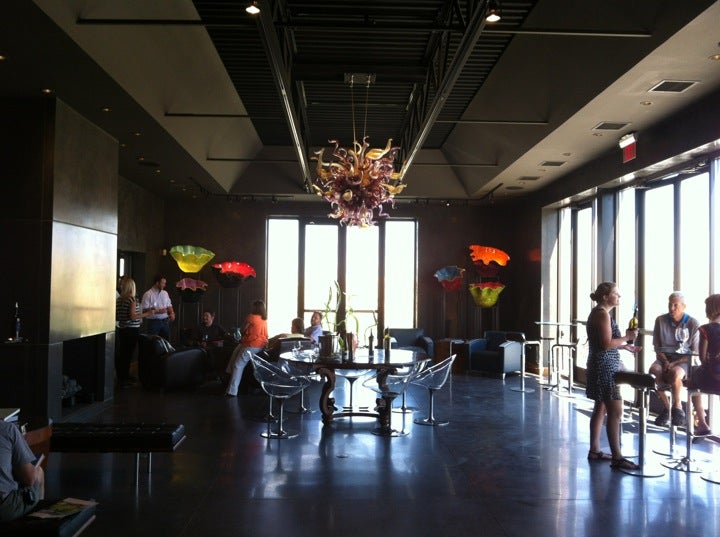
We started at Long Shadows, which has a wonderful display of Chiluly art. Here, we bought another Super Tuscan plus a Syrah.

My John and Long Shadows John

Chiluly Art
Next, we went to Seven Hills, the fifth oldest winery in Walla Walla. Here, we bought a Sauvignon Blanc, a Syrah, a Cabernet and a Malbec.
We finished our day and trip at El Corazon, a winery that many people told us about. Some people referred to it as a frat house. When we went there, we understood what people were talking about. We bought their Syrah/Mouvedre blend, which was very good. We were sad that the owner wasn’t there when we were there. We would have loved to have met him. Maybe next time.
The History of Walla Walla
According to the city of Walla Walla, “The land now encompassing the city of Walla Walla has been home to the people of the Cayuse (Weyíiletpu), Umatilla (Imatalamłáma), and Walla Walla (Walúulapam) tribes since time immemorial. Their ancestral lands stretch from the lowlands of the Columbia River to the highlands of the Blue Mountains in present-day southeastern Washington and northeastern Oregon.
“In the 1830s, white Christian missionaries followed the traders and explorers and sought to convert local tribes to Christianity.” A lot of tensions followed. A treaty “was signed on June 9, 1855, but not ratified by Congress until March 8, 1859. After ratification, the Cayuse, Umatilla, and Walla Walla people were prevented from continuing their traditional lifeways and were systematically relocated, sometimes by force, to the reservation. After the Treaty of 1855 was ratified, the U.S. government declared the ceded land open to American settlement, initiating the first wave of American settlement into the Walla Walla Valley. Fort Walla Walla was relocated in 1856 to a location southwest of the present-day city.”
Walla Walla was incorporated as a city in 1862.
The city is now known for its wine country, fertile agriculture, historic charm, and the famous Walla Walla sweet onion.
 Previous Post
 Next Post