
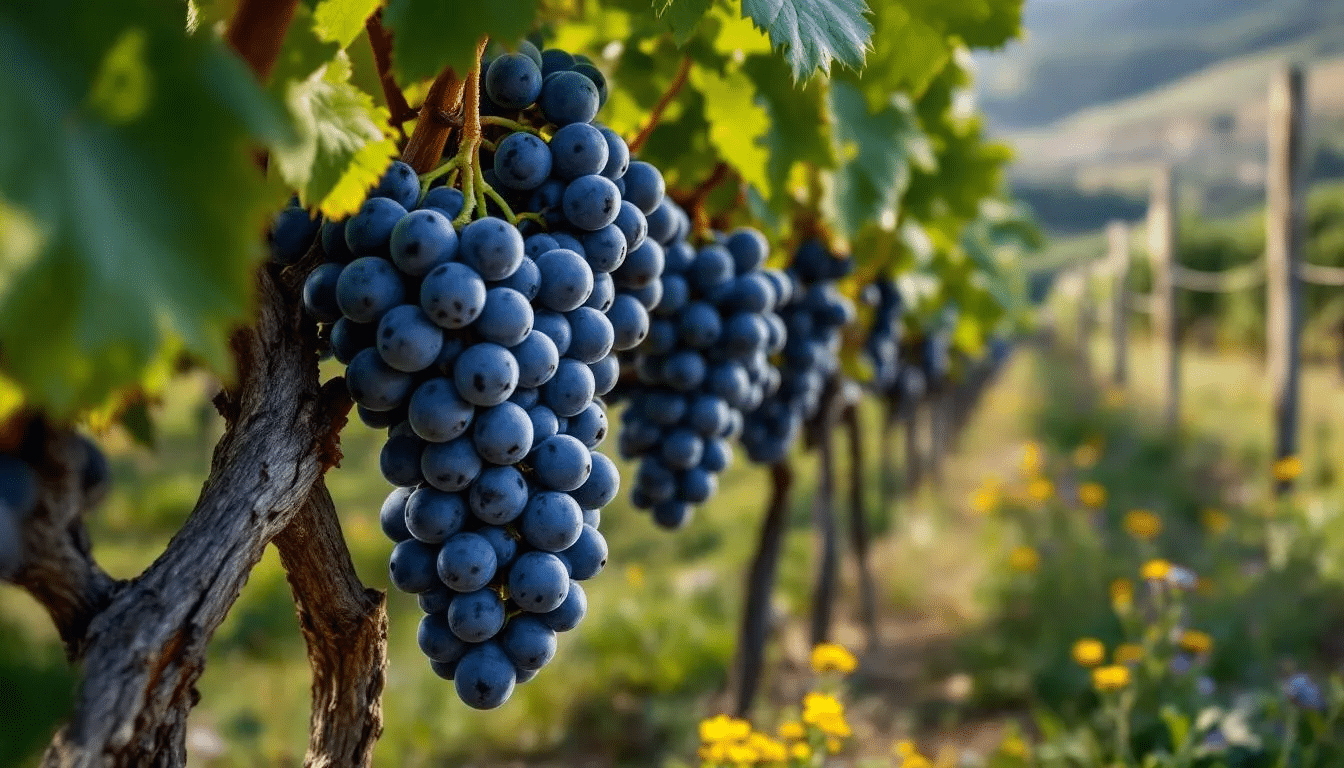
Teroldego: The Prince of Trentino
Meet the inky Alpine red, Teroldego, that shares a family tree with Syrah, nearly vanished in the 20th century, and was rescued by one very determined young woman.
If you’ve ever poured a glass of red and found it so purple it nearly stained the bowl, yet it drank light-footed and juicy rather than heavy, you may already have met Teroldego. Or you may not have, because outside one small corner of northern Italy, this grape is still something of a well-kept secret.
That’s exactly why I love it. Teroldego has nearly everything a wine nerd could want: medieval paperwork, a surprise DNA connection to one of the world’s most famous grapes, a near-death experience, and a comeback story worthy of a movie. Best of all, it makes genuinely delicious wine at prices that won’t make you wince. Let’s pull a cork and dig in.

Teroldego
First Things First: Say It Like a Local
It’s teh-ROHL-deh-goh, with the stress on the second syllable. Say it with confidence at your next tasting and watch heads turn.
Teroldego is a dark-skinned red grape native to Trentino, the southern half of Italy’s northernmost wine region, Trentino-Alto Adige. It grows in the shadow of the Dolomites, and it has been there a very long time.
Six centuries (at least) of paperwork
The grape’s documented history in Trentino reaches back to at least 1383, when a barrel of “vinum teroldegum” was recorded as payment on a loan. By the 15th century, documents were recording sales of Teroldego wine, and the wine had enough prestige to be served during the Council of Trent (1545–1563), the great Catholic gathering held just down the valley.
Centuries later, Goethe travelled through the area and reportedly called the Campo Rotaliano one of Europe’s most beautiful gardens under vine. Locals still proudly call Teroldego “the prince of Trentino wines.”
Where does the name come from?
Nobody knows for certain, and that’s half the fun. There are three popular theories:
- “Tiroler Gold” (gold of the Tyrol). The most romantic story, linking the name to the German dialect once spoken here. Lovely, but probably legend.
- The “tirelle.” Vines here were traditionally trained on wire harnesses called tirelle. Many scholars find this the more likely, if less glamorous, explanation.
- A place name. The reference book Wine Grapes points to a locality called Teroldege, where 15th-century documents record Teroldego wine changing hands.
A Surprise in the Family Tree
Here’s where Teroldego gets really fun for grape geeks. In 2006, Swiss grape geneticist José Vouillamoz and Italian researcher Stella Grando analyzed DNA from dozens of grape varieties and found what Vouillamoz called the first evidence of a genetic link between grapes across the Alps.
The headline: Teroldego and Dureza are full siblings, sharing both parents. Dureza is an obscure grape from France’s Ardèche, and it happens to be the father of Syrah. Which makes Teroldego, believe it or not, Syrah’s aunt.
The Italian side of the family is just as interesting. DNA work shows Teroldego is a parent of Lagrein, the dark, velvety red of neighbouring Alto Adige, and closely related to Marzemino, another Trentino native.
So when you taste that deep color and peppery edge, you’re tasting a family resemblance. Teroldego shares Syrah’s inky hue, but it carries the lighter, fresher personality of its Alpine relatives.
Home Turf: The Campo Rotaliano
Most great mountain wines come from steep hillsides. Teroldego’s heartland is the surprising exception: a flat, roughly triangular plain called the Campo Rotaliano (or Piana Rotaliana), just north of the city of Trento.
The plain sits at about 200–250 meters where the Noce River flows into the Adige. Over millennia, the Noce carried gravel, sand, limestone, porphyry and granite down from the Dolomites and dumped it here. The result is a deep, free-draining bed of stones that behaves much more like a hillside than a valley floor would. Afternoon winds funnelling down from the Val di Non help, too, cooling the vines and drying the air so rot has a harder time taking hold.
The DOC
Teroldego Rotaliano DOC was granted on February 18, 1971, making it the first varietal DOC in Trentino. A few key rules:
- 100% Teroldego, no blending allowed. It is the only appellation in Italy devoted entirely to this grape.
- Grapes must come from the communes of Mezzolombardo, Mezzocorona and Grumo (San Michele all’Adige).
- The zone is tiny, only about 400–450 hectares, farmed by more than 300 growers.
- Styles include the standard red (rosso), a rosé (rosato, also called kretzer), and the longer-aged Superiore and Superiore Riserva.
One label wrinkle worth knowing: several top producers bottle their Teroldego as Vigneti delle Dolomiti IGT instead of DOC. Created in 1997, this broader category gives winemakers more freedom with blending, vessels and vineyard sources. So don’t assume an IGT Teroldego is a lesser wine. Some of the very best ones wear that label.
A Near-Death Experience, and the Woman Who Saved It
Teroldego is a naturally vigorous vine. Left to its own devices, it will happily produce enormous crops. That trait nearly ruined it.
In the 20th century, commercial pressure pushed growers toward high-yielding clones planted on the traditional pergola trentina, a high overhead trellis that can carry a lot of fruit. Overcropped Teroldego makes thin, sour, forgettable wine. Much of it disappeared into anonymous blends, or was shipped south simply to add colour to paler wines in rainy vintages. The grape’s reputation sank.
Enter Elisabetta Foradori
In 1984, Elisabetta Foradori took over her family’s estate in Mezzolombardo at just 20 years old, after her father’s death. While much of Italy was busy planting Cabernet and Merlot, she bet everything on the local grape everyone else was writing off.
Her secret weapon was massal selection. Instead of replanting with the same high-yield nursery clones, starting in 1985 she propagated cuttings from the healthiest, most interesting old vines in her vineyards. Over the years, the work helped register around 15 new clones and rebuilt the genetic diversity the grape had been losing.
The proof arrived in the bottle. Her first Granato, from the 1986 vintage, came from old pergola-trained vines and showed that Teroldego could make a serious, structured, age-worthy wine. It helped put the grape, the estate and the whole region on the international map.
Foradori kept evolving. She converted the estate to biodynamic farming in 2002 (certified 2009) and began fermenting and ageing some Teroldego in clay amphorae (Spanish tinajas), after concluding that wood was masking the grape’s character. Today her children, Emilio, Theo and Myrtha, run the winemaking, and Elisabetta is widely known as “the lady of Teroldego.”
To be fair, she wasn’t alone. Big cooperatives like Mezzacorona (which released the first DOC bottling in 1971) and Cantina Rotaliana in Mezzolombardo kept the flame lit too. But Foradori is the name that changed how the wine world sees this grape.
What’s in the Glass?
Here’s the delightful contradiction at the heart of Teroldego: it looks like a big, brooding monster and drinks like something far more lively.
- Color: Deep ruby to inky purple, often almost opaque.
- Fruit: Blackberry, black cherry, blueberry and plum, lifted by brighter notes of raspberry, cranberry and pomegranate.
- Beyond fruit: Violets, fresh herbs and mint, black pepper, sometimes tar or licorice. Older wines can drift toward earth, leather, even a whiff of truffle.
- The signature finish: A gentle bitter-almond note, very typical of northern Italian reds.
- Structure: Fresh, often vibrant acidity; tannins that are usually soft to medium, though serious bottlings can show real grip.
- Alcohol: Typically moderate, around 12.5–13.5% in Trentino; warmer New World sites run higher.
Two personalities
Think of Teroldego as having two moods:
- Fresh and fruity. Most everyday cooperative bottlings are bright, crunchy and juicy, often compared to a cru Beaujolais. Drink these young, within a few years of the vintage. They take a light chill beautifully, which makes Teroldego a perfect candidate for the chillable red trend.
- Serious and structured. From old vines, low yields and careful ageing, wines like Granato or a good Riserva gain depth, density and the ability to age 10 years or more.
Tasting tip: If you’re blind-tasting, the giveaway is that combination of near-black color with zippy acidity and modest tannin. Syrah of the same color would usually feel heavier; Lagrein would usually feel softer and more chocolatey.
Teroldego Beyond Italy
Teroldego has quietly packed its bags, and the results are worth seeking out. In Italy itself, small amounts grow in the Veneto, Tuscany and Sicily, mostly as a blending grape for colour. But the most exciting action abroad is happening in the New World.
- California: The grape has found a real home in Lodi, where warm days and cool evenings ripen it fully while keeping its acidity. Producers like Peltier and Jeff Runquist make well-reviewed versions, and you’ll find others in the Central Coast and Santa Barbara. Expect a riper, fleshier style, often with more oak.
- Oregon: Down in Southern Oregon, Teroldego has been planted near Ashland since 2010, producing inky, plush, approachable reds.
- New York: The Finger Lakes offer a cool-climate take, with Red Tail Ridge among the pioneers.
- Australia: Plantings are scattered from McLaren Vale and Margaret River to the Alpine Valleys of Victoria, where the Michelini family brought the grape from their Trentino roots.
Growers in warmer regions have noticed something useful: Teroldego’s naturally high acidity, a challenge in cool Trentino vintages, becomes an asset in the heat. Expect to see more of it as winemakers look for grapes that hold their freshness in a warming climate.
At the Table
Teroldego’s fresh acidity and gentle tannins make it a wonderfully flexible food wine. Take a cue from the mountain kitchens of Trentino:
- Speck and cured meats. The spice in the wine and the smoke in the ham were made for each other.
- Canederli, Trentino’s beloved bread dumplings, in broth or with butter and cheese.
- Polenta with mushrooms or a rich ragù.
- Smoked pork, sausages and grilled meats.
- Braised beef or game for the bigger, Riserva-style wines.
- Alpine cheeses with a little age on them.
- Pizza and tomato-based pasta. The acidity handles tomato with ease, making an everyday Teroldego a fantastic weeknight red.
Serving tips
- Serve fresh, fruity styles slightly cool, around 14–16°C (57–61°F). Twenty minutes in the fridge is perfect.
- Give structured wines like Granato a little air in a decanter, and serve them a touch warmer.
- A standard red wine glass works fine; a Burgundy bowl shows off the aromatics.
Bottles to look for
| Wine | Style | Why try it |
|---|---|---|
| Mezzacorona or Cantina Rotaliana Teroldego Rotaliano DOC | Fresh, fruity | Affordable, widely available introductions |
| Foradori Teroldego (Vigneti delle Dolomiti IGT) | Elegant, balanced | The benchmark entry point to the master’s style |
| Foradori Morei and Sgarzon | Single-vineyard, amphora-aged | Same grape, two sites: Morei denser and darker, Sgarzon lighter and more floral |
| Foradori Granato | Structured, age-worthy | The wine that put Teroldego on the map |
| Endrizzi Teroldego Rotaliano Superiore Riserva | Structured | A historic Rotaliano producer founded in 1885 |
| Lodi Teroldego (Peltier, Jeff Runquist) | Riper, fuller | See how the grape speaks Californian |
Fun experiment: open the Morei and Sgarzon side by side. They’re made the same way, so the differences you taste come from the vineyards.
The Last Sip
Teroldego is proof that the wine world’s best stories often hide in its smallest corners. A grape with 600-plus years of history, a surprising family connection to Syrah, a brush with extinction, and a heroine who brought it back. Fresh enough to chill, serious enough to cellar, and friendly enough for Tuesday-night pizza.
Next time you spot that tongue-twister of a name on a shelf, grab it. Then pour a glass for a friend and tell them the story. That’s half the fun of wine, isn’t it?
Want to explore unusual grapes like Teroldego with friends? I host private wine tastings at home, where we taste, learn and swap stories just like this one. Book your tasting here.
Cheers!
 Previous Post