
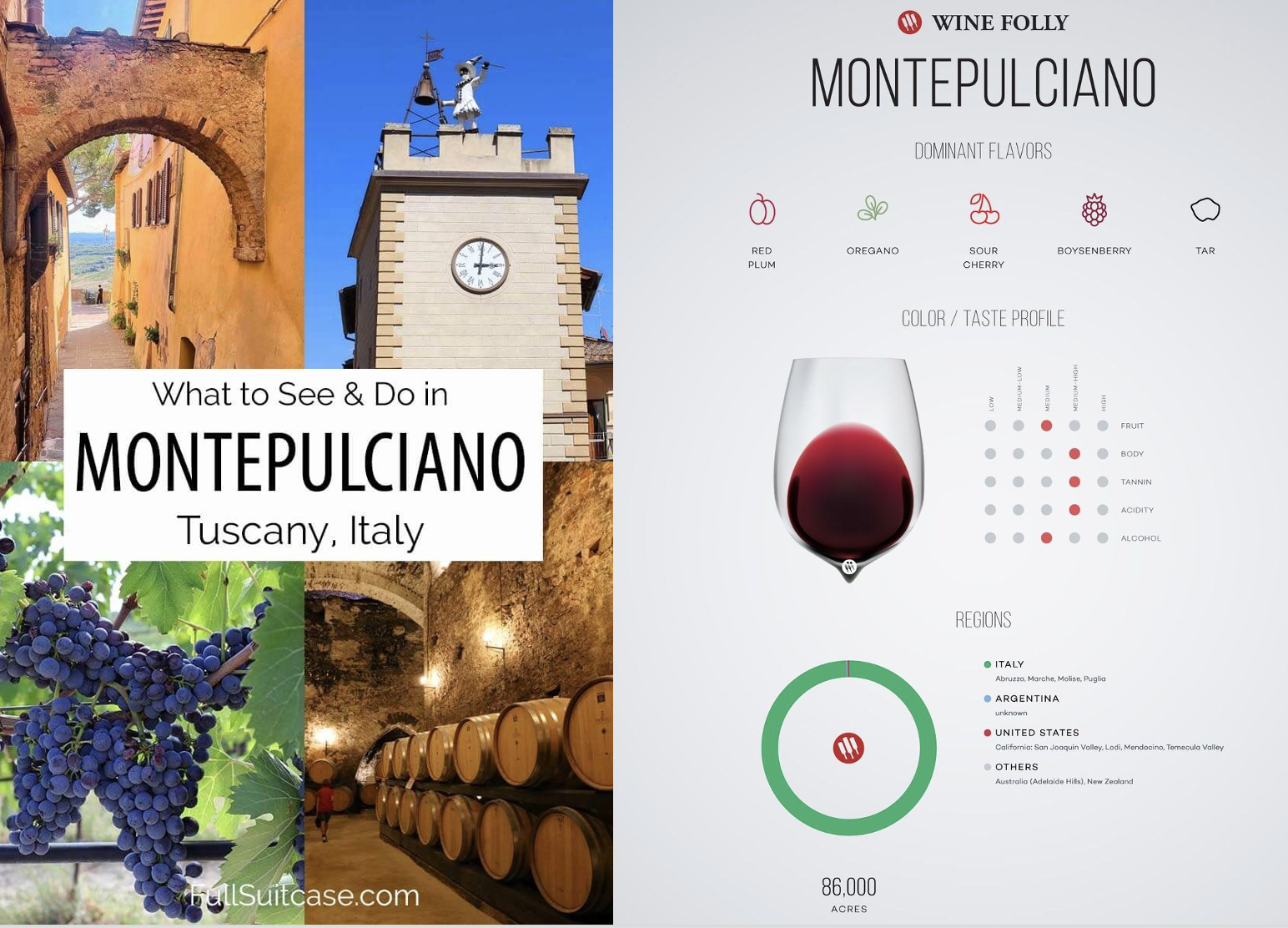
Montepulciano is both a wine and a city. But the two aren’t at all related. The Montepulciano grape does not grow in the city with the same name. Today, we’ll explore both. Thank you to Red Wine, the Comprehensive Guide to the 50 Essential Varieties & Styles for their help with this article.

Montepulciano, the city and the wine
The City
Visit Tuscany tells us that the city of Montepulciano “epitomizes the Tuscany of your dreams: a picturesque medieval village perched on a hilltop, ideal for those seeking relaxation and for lovers of good wine.”
Their recommended activities:
- Piazza Grande is the heart of Montepulciano, the village’s meeting point filled with history, architecture and cultural life.
- Palazzo Comunale is one of the town’s symbolic buildings reflecting the town’s historical prestige.
- Several churches, including the cathedral
- The Medici Fortress, built in 1261 as a military building
- The Passeggiata Poliziana walkway
- Montepulciano Lake Nature Reserve
- Sangiovese wine and pecorino cheese
The Wine
Montepulciano originated in Abruzzo in east-central Italy. It is Italy’s second most widely planted indigenous grape variety, after Sangiovese, with about 75,000 acres growing across the country.
The grape grow throughout central and southern Italy.
Winemakers in New Zealand and Australia are experimenting with the variety, and you can also find the grape in Lodi, Mendocino and Temecula in California.
The Taste and Smell
Expect aromas of red fruits, including red plum, boysenberry and raspberry, and flavors that can range from red fruits to plum and cassis, finishing with herbal notes of dried oregano and thyme.
Food&Wine says that “Montepulciano tends to produce wines that shine in their youth. Its tannic structure, while occasionally assertive, isn’t usually overwhelming, so it does not tend to require any notably extended period of aging to reach its peak.”
Food Pairings
Food&Wine goes on to say that the wine “is a go-to for comfort food. Pizza, whether plain or with an assortment of toppings from pepperoni to mushrooms, is a classic pairing partner. Simple pastas work well, too, from alfredo to marinara. Montepulciano has enough acidity to stand up to the acid of tomatoes with ease. And sipped with a platter of prosciutto, asiago, parmesan, or mozzarella, or just some good bread and olive oil, it’s a guaranteed home run. Just remember to chill the bottle a bit, which will highlight its freshness.”
 Previous Post
 Next Post