
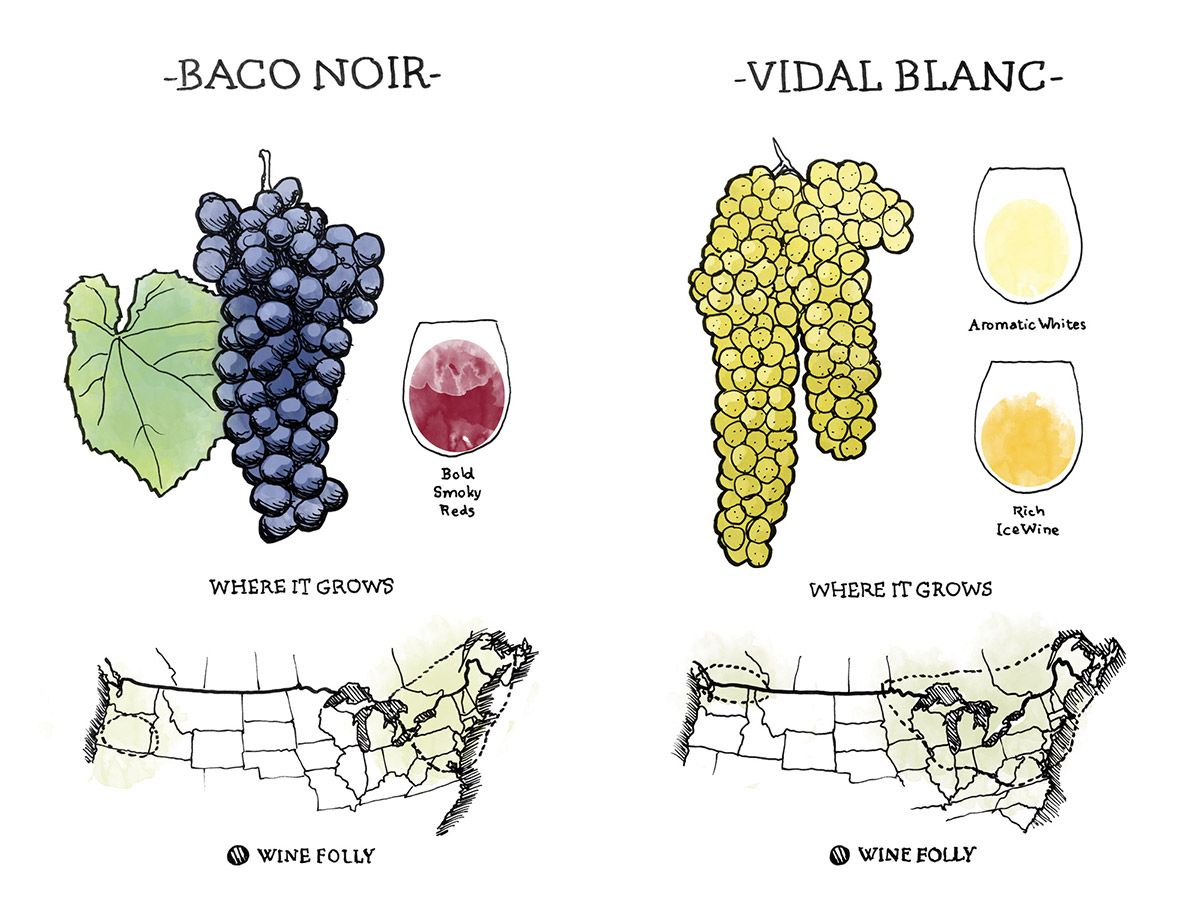
Toast has an article about 15 wine trends in 2025. One that they highlighted is the trend towards hybrid wines. They talk about “climate change forcing winemakers to look for varietals that can thrive in shifting environmental conditions.”

Two hybrid wines from France
How Is Climate Change Impacting Grapes and Wine?
WineEnthusiast says that:
- The increase in temperature on the West Coast restricts water access and accelerates wildfires;
- Growing areas on the East Coast and pockets of the Midwest experience an increase of rainfall. This, in combination with overall higher temperatures, has led to elevated levels of humidity;
- “Warmer nights extending into ripening season change the character of fruit and lead to more late-season disease pressure like mildew, Phomopsis, Botrytis and fruit rots.
“A key gap in some sustainability programs is that we are starting with plants that are highly susceptible to these diseases.”
Many of the hybrid wines are bred to resist disease and adapt to climate changes.
More Details About Hybrid Wines
GSI explains that “A hybrid grapevine is the result of crossing two different grape species. (Note that different varieties of European wine grape aren’t separate species—Pinot Noir and Chardonnay are both vinifera despite their drastically different appearance and flavor.)..[The term] typically refers to the crossing of European Vitis vinifera grapes and grapes native to the Americas. Like most plant hybrids, these grapes have usually been introduced to solve winegrowing problems, most often combining vinifera’s popular flavor profile with native grapes’ resilience.”
Native grapes are Vitis aestivalis, Vitis rotundifolia, Vitis rupestris and Vitis labrusca. “The wine is described…as highly acidic and inferior to vinifera-based wine imported from Europe…The flavor of native grapes is often described as foxy.” In fact, Vitis labrusca is referred to as fox wine.
A Positive Spin
Living Loving Wine puts a positive spin on hybrid grapes and wines: “Hybrid grapes represent innovation in the wine world. They are proof that with creativity and science, the boundaries of winemaking can expand. These grapes introduce wine lovers to new tastes and open up possibilities for winemakers to grow grapes in challenging environments. They’re not just the future of wine; they’re making the wine world more exciting right now.” They also say that the right combination of a Vitis vinifera, which features amazing tastes, with one of the other Vitis grapes, which features resistance to disease, can make for a wonderful new wine.
Have you tried any hybrid wines? What did you think?
 Previous Post
 Next Post