
For many years, I have said that I’m a member of the ABC club – the Anything but Chardonnay club. Why? Because I’m not a fan of butter/oak bombs, and I want more fun out of my white wine. Many years ago, I wrote an article called Why Chardonnay Tastes like Chardonnay. In the article, I highlighted that terroir, oak and wine-making methods all contribute to making Chardonnay Chardonnay. Today’s focus will be on the fact that not all Chardonnays are the same. I hope you enjoy it.

Not all Chardonnays are the same
A Happy Awakening
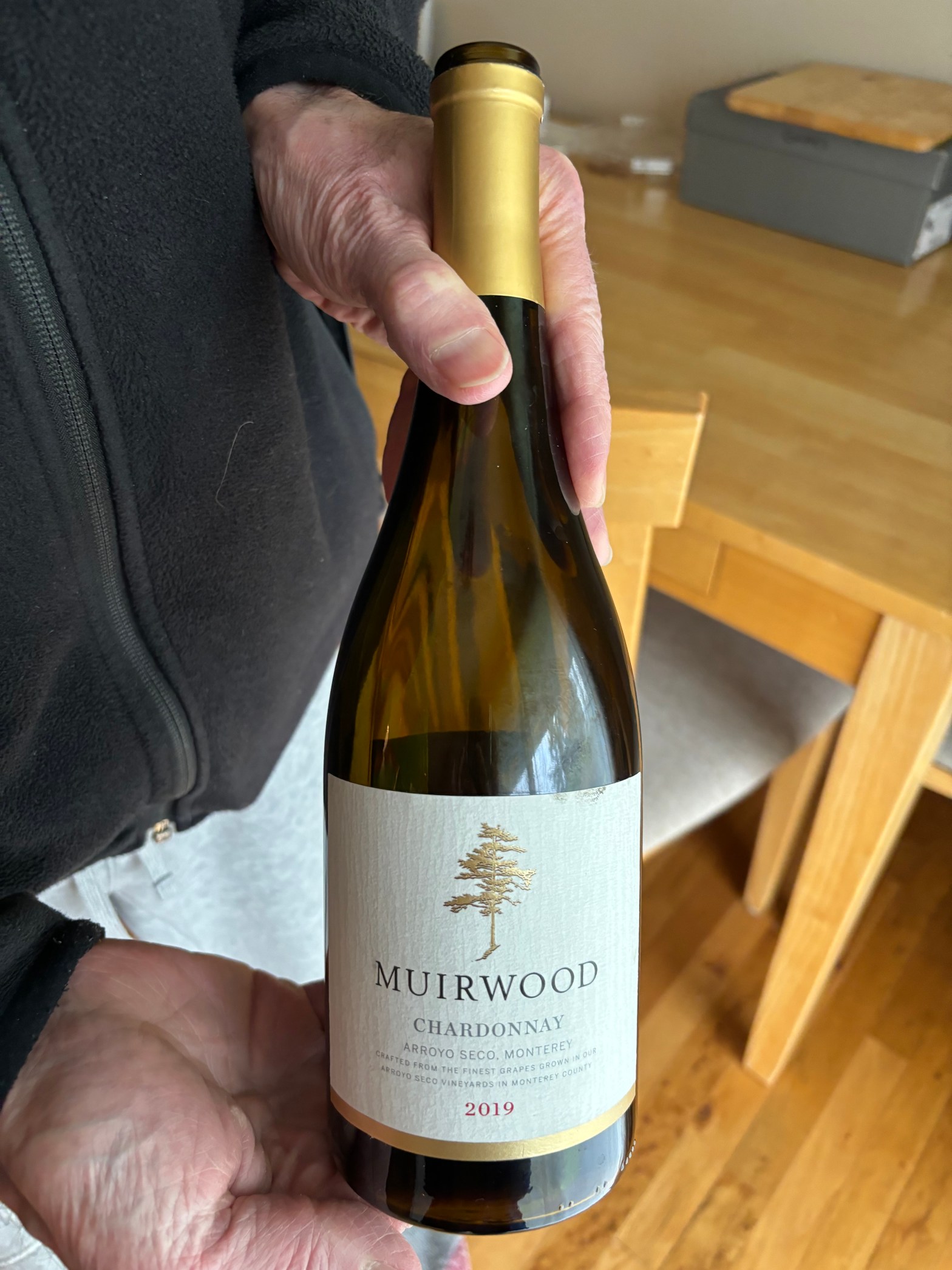
I’ve known for a long time that not all Chardonnays are the same. Nevertheless, I avoid them like the plague because, on average, most will not be to my liking. The other night, my boyfriend served up a Muirwood Chardonnay from Monterey. I had known that Monterey Chardonnays were less oaky and buttery than many, and I’d heard that some even taste a bit like Sauvignon Blanc. But I’d never tasted one as good as the Muirwood one. For the moment, I happily got rid of my ABC membership.

Muirwood Chardonnay
About Muirwood Chardonnay
Since the 1970s, Muirwood‘s grapes are grown in Arroyo Seco, which is located southeast of the Monterey Bay in the valley adjacent to the Arroyo Seco Creek. At that time, the winery was “captivated by the raw beauty and exceptional potential of the undiscovered Arroyo Seco wine region in Monterey County. Today this area has emerged as one of California’s most celebrated wine-growing regions, and among the most breathtaking.”
The winery describes the wine as “crisp tropical fruit notes and flavors, creamy, rich finish.”Wine Enthusiast goes further: “Crisp aromas of lime peel and pear flesh are lively on the nose of this bottling. There’s a firm tightness to the sip, where more citrus and pome fruit flavors align against a vibrant acidity.” I think they nailed it. The pears brings to mind Chardonnay, but the vibrant acidity evokes Sauvignon Blanc. Such a perfect combination. Another good note about the team at Muirwood: they are environmentalists, “inspired by the legacy of John Muir, who sought to preserve the wilderness for future generations. With four generations of California farming in harmony with nature, we have great respect for this land we call home. Like John Muir, we take a long-term perspective. We believe in nurturing the land so that it may bear fruit for generations to come.”
Other Chardonnays that I Will Try
Thankfully, not all Chardonnays are the same. I have enjoyed some French Chardonnays, which are more subdued and gun-metally. I also sometimes like non-oaked Chardonnay, although sometimes I find these a little boring. The truth about Chardonnay is that it’s a neutral grape – kind of like the tofu of grapes. So you need to do some things to it to make it sing. And sometimes the lack of oak negatively contains the grape’s full expression.
Liquor.com has a great article called “7 Chardonnays for People Who Think They Hate Chardonnay.” In it, they highlight the following wines, which I’m likely to check out:
- Chacra Chardonnay ‘Mainque’ from Patagonia, Chile
- Day Wines Belle Pente Vineyard from Yamhill-Carlton OR
- Domaine Moreau-Naudet Chablis Cru Vaillons from Chablis, France
- Domaine Rolet Arbois from Jura, France
- Kumeu River Estate from Kumeu, New Zealand
- Petit Chapeau Bourgogne Blanc from Burgundy, France
If you try any of these, I would love to hear your thoughts. Cheers!
 Previous Post
 Next Post